




With the arrival of Mawlid al-Nabi, celebrated today, when souls embrace with love and remembrance, the question arises about the presence of spirituality in Egyptian visual memory. Cinema, which has never been merely a screen, has captured from people’s lives what is deeper than their daily: their breaths in remembrance circles, their joy in celebrations, and their sincerity in popular rituals that blend religion and life until they become one face of identity.
For centuries, Egyptians have celebrated this anniversary with rituals that combine spiritual serenity and popular celebration. It began with the Fatimid state, when processions took to the streets, decorations were put up, and sweets were distributed. Eventually, the Mawlid took on two complementary aspects: the first overflowing with praise, chanting, and remembrance; the second popular, filled with decorations, lights, and markets. This unique duality between spirituality and joy became an integral part of the cultural identity of the Egyptian people. It was only natural that it found its place in cinema, which captured this spirit from its inception and sought to document it. Whether as a Sufi ritual appearing on screen as a symbol of Egyptian spiritual life, or as a popular heritage of joy that reflects identity.
A window on the popular spirit
In this sense, Egyptian cinema was not merely a means of recording reality. It was an open window on the depths of the popular spirit, documenting religious heritage and spiritual rituals as part of everyday life. Although modern films have become more attracted to urban stories and their fast pace, those old scenes retain their value, not only as memories of the past, but as visual documents proving that spirituality is deeply rooted in the Egyptian consciousness.
With the Prophet’s birthday, these images return to illuminate the collective memory: squares filled with remembrance, hearts attached to the love of the Prophet. Souls seeking serenity amid the hustle and bustle of life. And on screen. The spiritual heritage remains an eternal witness to the fact that religion and culture in Egypt have never been two separate worlds, but rather a single river in which love and identity flow together.
The Prophet’s Birthday in Cinema
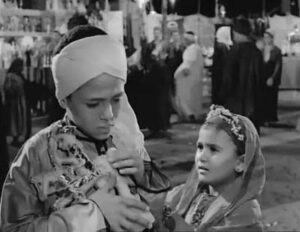
The Prophet’s birthday is at the heart of the story in Qandil Umm Hashim, a film based on a novel by Yahya Haqqi. The locals resort to qandil oil for blessings, reflecting the relationship between science and faith, modernity and popular heritage. The film documents the traditions of celebrating the Mawlid and highlights how this heritage is an integral part of the spiritual and cultural identity of Egyptians.
In the film Al-Mawlid, starring Adel Imam and Yousra, the hustle and bustle of swings, decorations, and candy sellers is portrayed as a space for joy. But it also reveals a human tragedy when a mother loses her child in the crowd. Here, cinema documents the interaction between the individual and society, joy and loss, spirit and reality.
In the film Something to Fear, Fouada appears carrying a Mawlid while Atris holds a horse made of halva, symbolizing stolen innocence and collective consciousness. The Prophet’s birthday becomes a spiritual backdrop that reflects the conflict between childhood and injustice, spirituality and social reality.
Sufism and shrines in cinema
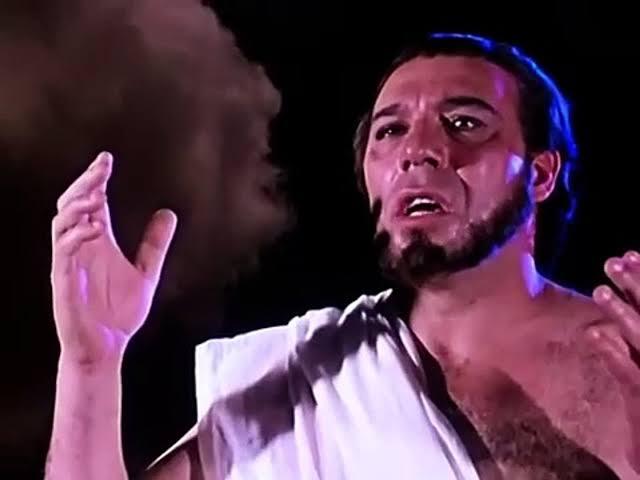
Sufi spirituality and shrines are evident in the film Martyr of Divine Love, which tells the story of Rabia al-Adawiya, the martyr who gave her heart to God. From a life of pleasure to a journey of contemplation and worship, it shows how the heart becomes a temple and time a respite for spirituality. It documents the meanings of Egyptian Sufism in their most beautiful form.
Also in the film Tareed al-Firdous (The Paradise Seeker), which follows the journey of Sheikh Alish, a dervish isolated between prayer, fasting, and worship. People make pilgrimages to him seeking blessings, and upon his passing away, he undergoes a spiritual trial that reveals the balance of his good and bad deeds. He is brought back to life to be tested. The film reflects Egyptians’ perception of the spiritual world and the connection between obedience and human experience with the soul.
In contrast, the protagonists of The Second Wife resort to the shrine of Al-Sayyid Al-Badawi, supplicating and imploring in moving Sufi scenes. Their prayers are answered in a way that transcends human logic. The film thus reflects the power of spiritual heritage, as the shrine becomes a living symbol of Egyptian spirituality.
The dominance of popular heritage
In The Joy Thief, the protagonist turns to the shrine for help in his financial and emotional crisis. This reflects the dominance of popular heritage in guiding people and giving them hope. It documents a part of Egyptian identity that combines popular belief and the search for blessings.
In Kit Kat, Fatima, who is separated from her husband, resorts to the shrine in the popular neighborhood to pray that Youssef, the son of Sheikh Hosni, will be hers, using the shrine as a mystical space for supplication. Later, their relationship grows stronger, and the humble prayer becomes the beginning of a heartfelt and spiritual bond, despite the relationship being socially forbidden.
Similarly, in the film For Love, One Last Story, the sick husband Rifaat and his wife Salwa raise their hands in prayer at the shrine of Sidi al-Talaoui during the Moulid. The film depicts the conflict between love and tragedy, illness and delusion, and painful truths. The protagonists move through the space of the shrine as if seeking salvation within themselves before any external force. This shows how shrines represent a space for receiving blessings, especially for those who are emotionally distressed, while heaven remains oriented toward the weak and needy.

The Wise Owner of the Shrine
In the good land, we see a religious woman visiting the shrine of Sidi al-Dakrouri to pray for guidance for her loved one, believing in the ability of the owner of the shrine to guide the young man to the right path. In a scene that reflects the blending of faith and love, the spirit of everyday life is highlighted.
Between the two palaces, the child Kamal resorts to the shrine of Al-Hussein, asking for his mother to be returned after she was expelled from the house, confirming the power of prayer and blessing in human life. This highlights the relationship between faith and prayer, love and spiritual attachment to the sacred.
The popular and the sacred in celebrations
The film The Big Night embodies the popular heritage of Mawlid, depicting a full day in the life of Sayyid Arsh . Circles of remembrance, rituals, and individual and collective stories intertwine in a rich cultural fabric that reflects the idea that Mawlid is not just a celebration, but a space for documenting heritage. It is a place of worship and joy, faith and hope.
The film Al-Mabrouk, on the other hand, explores the conflict between deception and fraud on the one hand, and popular faith on the other. Through the character of Hafez Al-Nassab, who influences the simple-minded, his lies are exposed after his son falls ill, confirming the power of popular heritage in shaping the lives of rural communities.
From this perspective, the spiritual and mystical scenes and popular celebrations in these works reveal the true essence of the Egyptian spirit. Even if they take place in a political, social, or other context. Cinema shows how daily life is intertwined with spiritual heritage. And how art preserves the identity and memory of the nation, documenting the Egyptian spirit in every shot, to remain a witness to the heritage and spirit of the people.
