



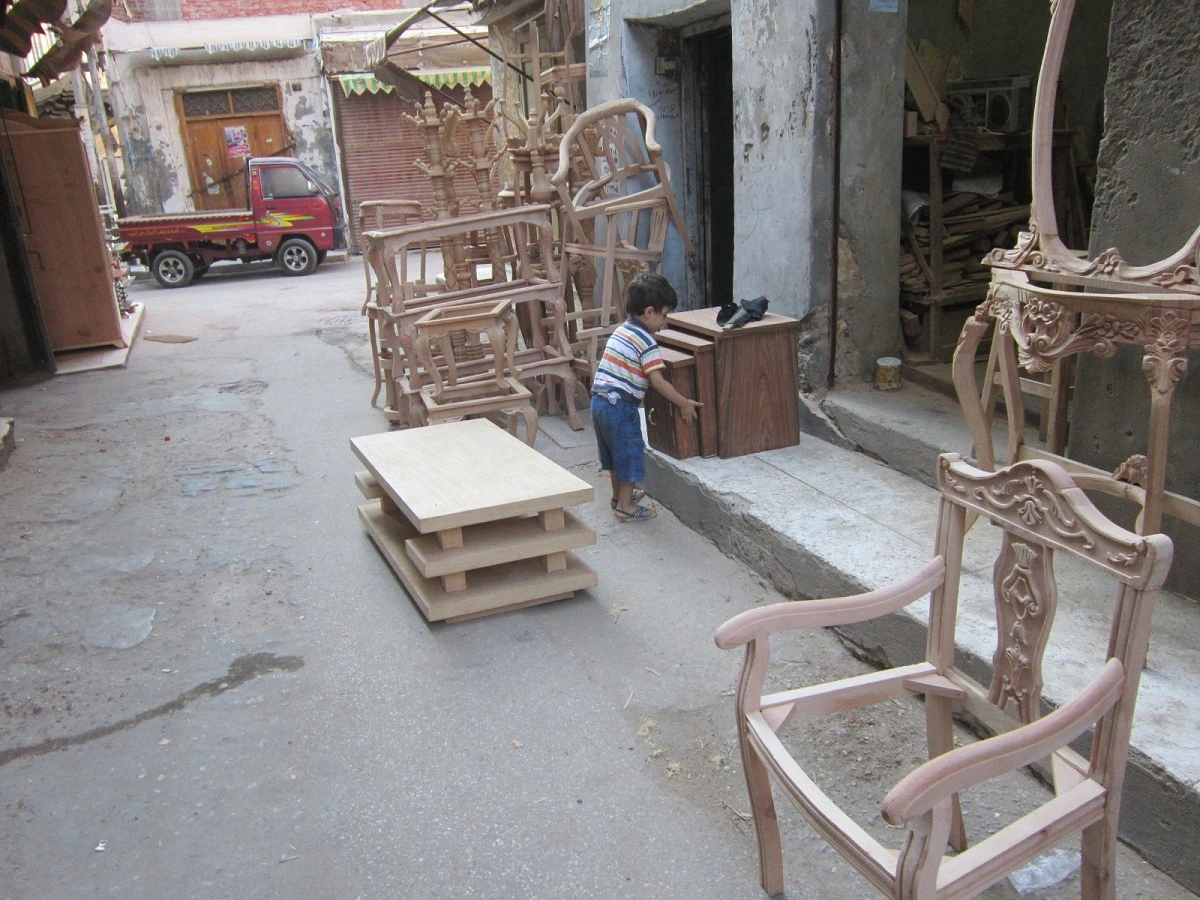
For two weeks after each Eid, every workshop in Damietta closes. No saws, no hammers, no production. The tradition, known as “Mobarka,” or blessing, began when master craftsmen left for pilgrimage. Decades later, it still sets the rhythm of work in Egypt’s furniture capital.
By Helmy Yassin
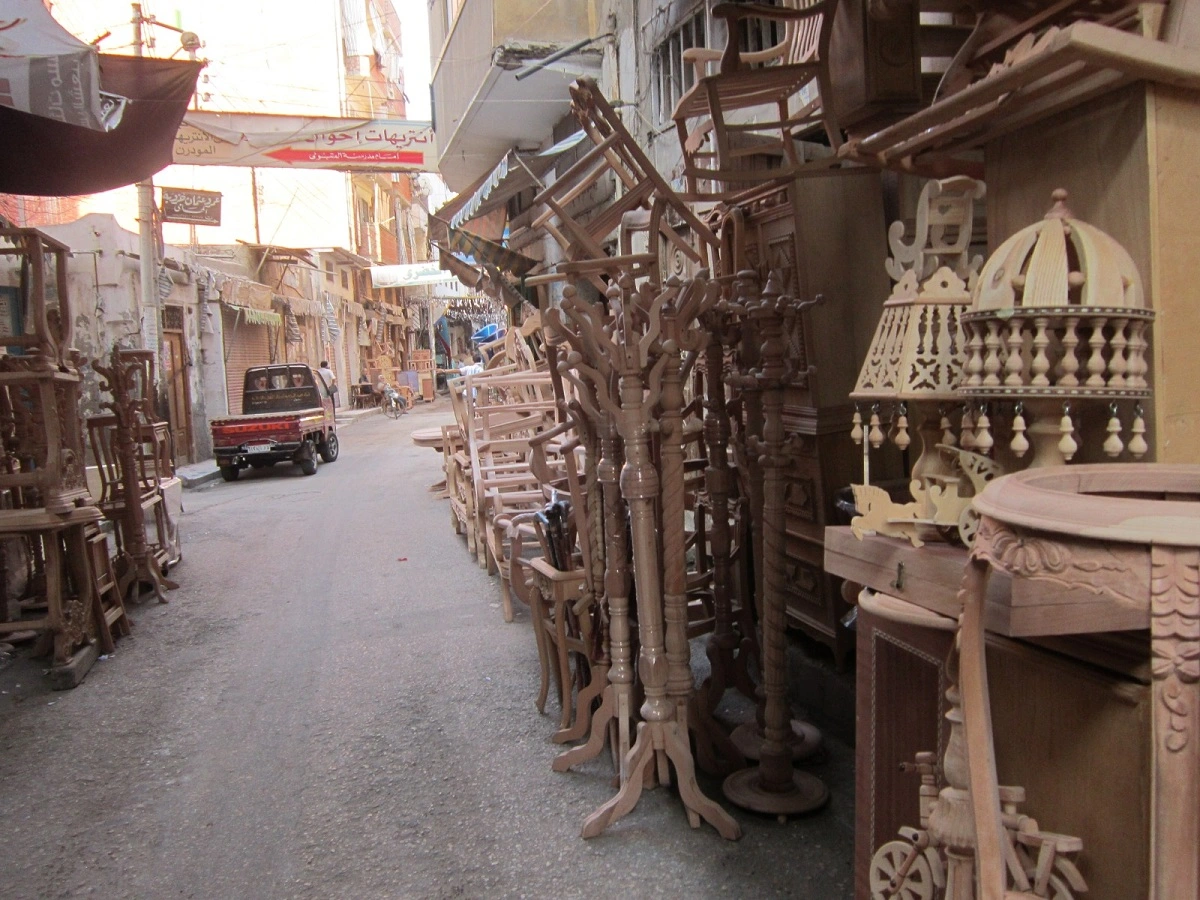
Twice a year, the furniture workshops of Damietta Governorate fall silent. After Eid al-Fitr and again after Eid al-Adha, the shops shut their doors completely for up to two weeks each time. It is a deeply rooted tradition within the craftsmen’s community, touching every stage of production from carpentry to wood finishing.
The Story of a Tradition Born From an Industry’s Boom
Haj Mohamed El-Barsh, an 84-year-old furniture maker in Damietta, traces the custom back to the late 1960s, when the furniture industry in the governorate experienced its first real surge. The master craftsmen, he explains, were eager to perform Umrah after Ramadan. The journey took about two weeks. That period naturally became a collective holiday, and every workshop closed.
The shutdown was total. It affected every link in the production chain: carpentry workshops, upholstery workshops, wood cutting shops. The period became known among craftsmen as “Mobarka,” a word that carries connotations of blessing and spiritual grace. Work stopped entirely, and senior craftsmen and workers received partially paid leave. The workshop owner would give them at least a week’s wages.
Scenes Repeated With the Hajj Season
Mobarka was not limited to the period after Eid al-Fitr. It repeated in similar fashion after Eid al-Adha. Just as the master craftsman performed Umrah after the first Eid, he would perform the Hajj pilgrimage after the second. The workshops would close again for about two weeks. The break became a mandatory rest for the employer, exhausted by travel, as well as an occasion for celebration and for greeting those returning from Hajj.
During this time, the employer did not forget his workers. He made a point of compensating them in various ways, including sending them sacrificial meat. It was a gesture of humanity and solidarity, reflecting the nature of relationships within the trade. Some also sent Eid money to the families and children of their workers.

A Rest That Revived the Market Without Any Planning
El-Barsh emphasizes that this custom, despite its simplicity and spontaneity, played an important role in supporting Damietta’s furniture industry without any prior planning. The complete halt of production for about four weeks each year, while furniture showrooms continued to operate, allowed for the clearance of stagnant inventory and helped reduce stockpiles.
In this way, Mobarka became an indirect mechanism for regulating sales. It offered time to assess the market and restore balance between supply and demand. It was one of those phenomena that arose from the repetition of a habit, offering a great service to the local economy.
Over the years, Mobarka ceased to be tied solely to master craftsmen travelling for Umrah or Hajj. It became a firmly established custom observed by everyone, whether they performed the rituals or not. It became part of the work traditions within Damietta’s furniture-making community, a recognised annual break that resets the rhythm of work, even in the absence of the original reason for its existence.
The Secret of the Craft Lies in the Master’s Hands
El-Barsh concludes by affirming that the essential reason for this tradition lies in the craft itself. The master craftsman cannot leave work without direct supervision. He personally oversees every stage of production, especially the early steps on which the quality of the final product depends.
This close connection between the master and his craft made his absence reason enough for a complete work stoppage. What began as a personal desire for a holiday became a collective tradition, lasting for decades and becoming part of the identity of furniture making in Damietta.
The Economic Impact on the Furniture Market
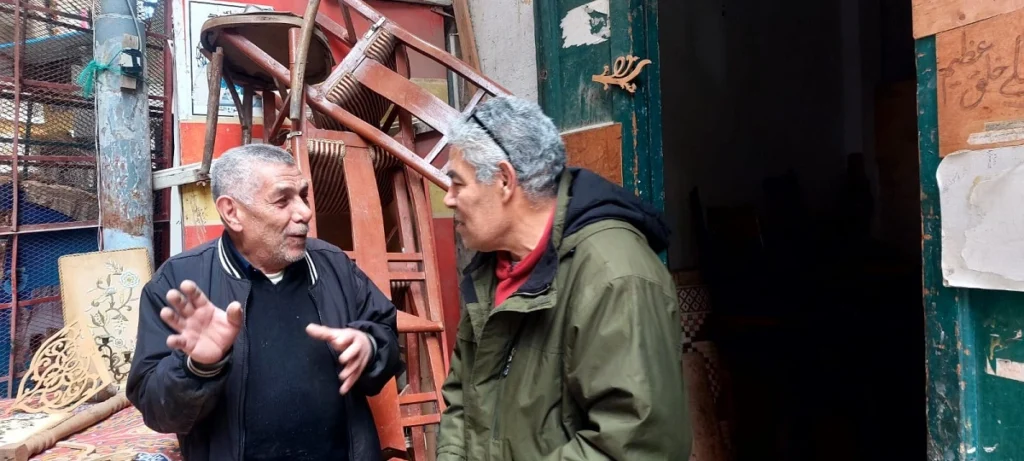
Haj Mohamed El-Hattab, marketing and exhibition manager at the Furniture Makers Syndicate in Damietta, explains that Mobarka is a well-known annual holiday among the craftsmen. The workshops close and then gradually resume work after two weeks, while the showrooms continue to operate.
El-Hattab notes that this period was completely different in the 1960s, 1970s, and early 1980s. Workers would go to Ras El-Bar beach only in the evenings. The workshops would remain open during the day, and workers would gather outside them to exchange conversation on various topics, from politics and football to the challenges facing the industry. This was especially true after the introduction of upholstery padding machines, which helped develop and improve production.
This period represented a great flowering of the furniture industry in Damietta. Its products were shipped to governorates across Egypt and even to foreign markets, strengthening its position as the origin of fine furniture.
Transformations of Baraka
El-Hattab continues that Baraka transformed in the early 1990s with the arrival of video cassettes in homes. Watching films and plays became an integral part of the holiday. But it began to fade with the emergence of satellite channels, which people still watch on the beaches of Ras El-Bar during evening gatherings.
Despite the changing rhythm of life and the evolution of industrial tools, Mobaraka remains part of the rituals practised by the people of Damietta. It blends hardship and rest, quality work and religious observance, and social and spiritual dimensions. Damietta, a city that has built a history out of wood intertwined with social practices and customs, has established a set of traditions that have become customary law governing its market without written regulations.
This is Mobarka, which brings blessings to workers and employers alike. A ritual of passage between two seasons. One imposes silence on the sound of saws and hammers. Then the workshops resume their ceaseless movement, as if creating a living rhythm that lightens the hardship and draws more blessings as their arts take shape on the wood.
