



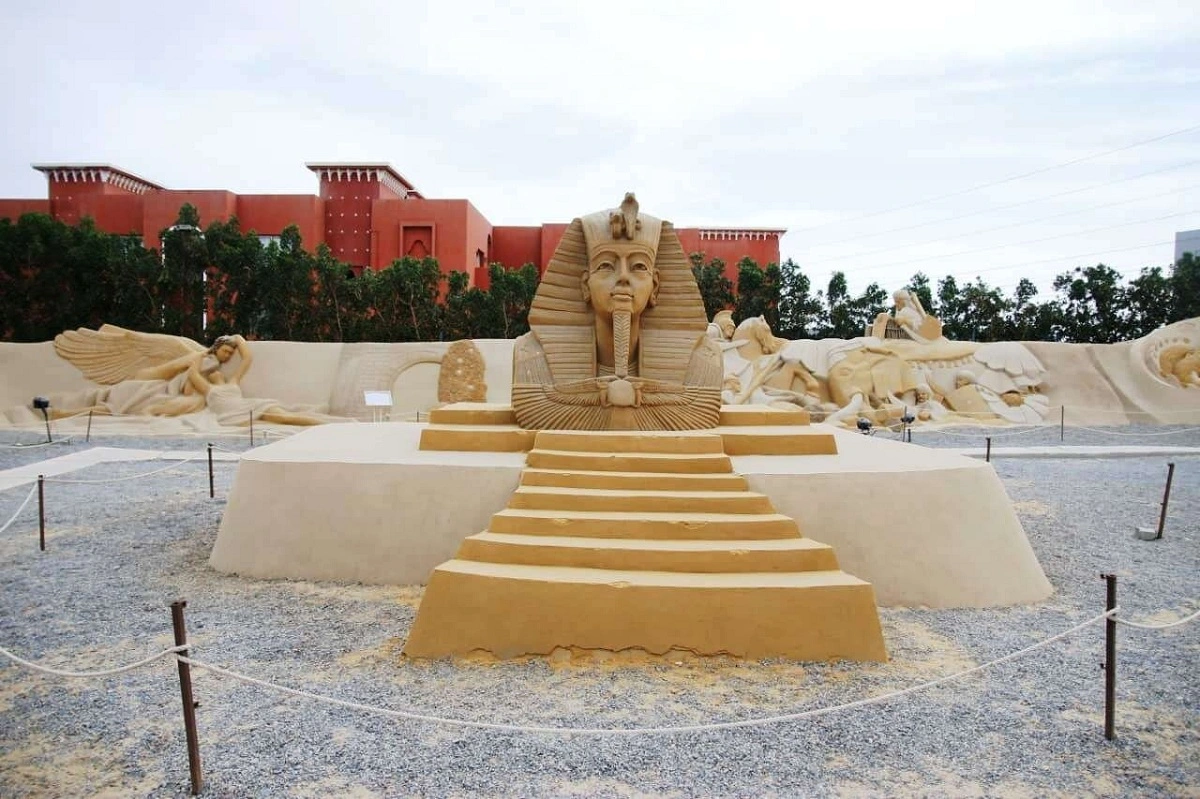
In Hurghada, an extraordinary museum is carved entirely from sand. Home to 59 sculptures ranging from pharaohs to superheroes, it ranks as one of only three sand museums in the world. Here’s how it’s made and why visitors keep coming back.
The Sand Museum on Egypt’s Red Sea coast is one of the most distinctive tourist attractions in Hurghada. It draws visitors for its unique artistic character, blending creativity with rarity. Though this art form is relatively new, it has established itself as a highlight in the itineraries of tour companies. The museum is globally significant: it ranks as the third sand museum in the world, joining only two others in Japan and the United States.
What the Museum Holds
Ali Mustafa Ali, a visual artist and antiquities restorer at the museum, explained to “Bab Misr” the museum’s artistic focus. “The Sand Museum is built on two main types of art,” he said. “The first is mythological art, and the second is the wonders of the earth.”
Mythological art draws from Greek mythology, stories of ancient gods, and historical legends. The “wonders of the earth” section features sculpted representations of the Seven Wonders of the World.
The museum contains 59 sculptures, including 19 three-dimensional works. The collection includes models of the pyramids and the Sphinx, statues of Greek and Roman gods, and other distinctive pieces. Among the featured sculptures are Napoleon Bonaparte, Queen Isis, Cleopatra, Alexander the Great, and Sultan Mehmed the Conqueror.
Sections of the Museum
Ali continued that the museum has a dedicated area for children featuring a large collection of cartoon characters and Hollywood figures beloved by modern youth. These include Batman, Spider-Man, Bakkar, Tom and Jerry, Jack Sparrow, Peter Pan, Bugs Bunny, Iron Man, Superman, Transformers, King Kong, and other famous characters.
How the Sculptures Are Made
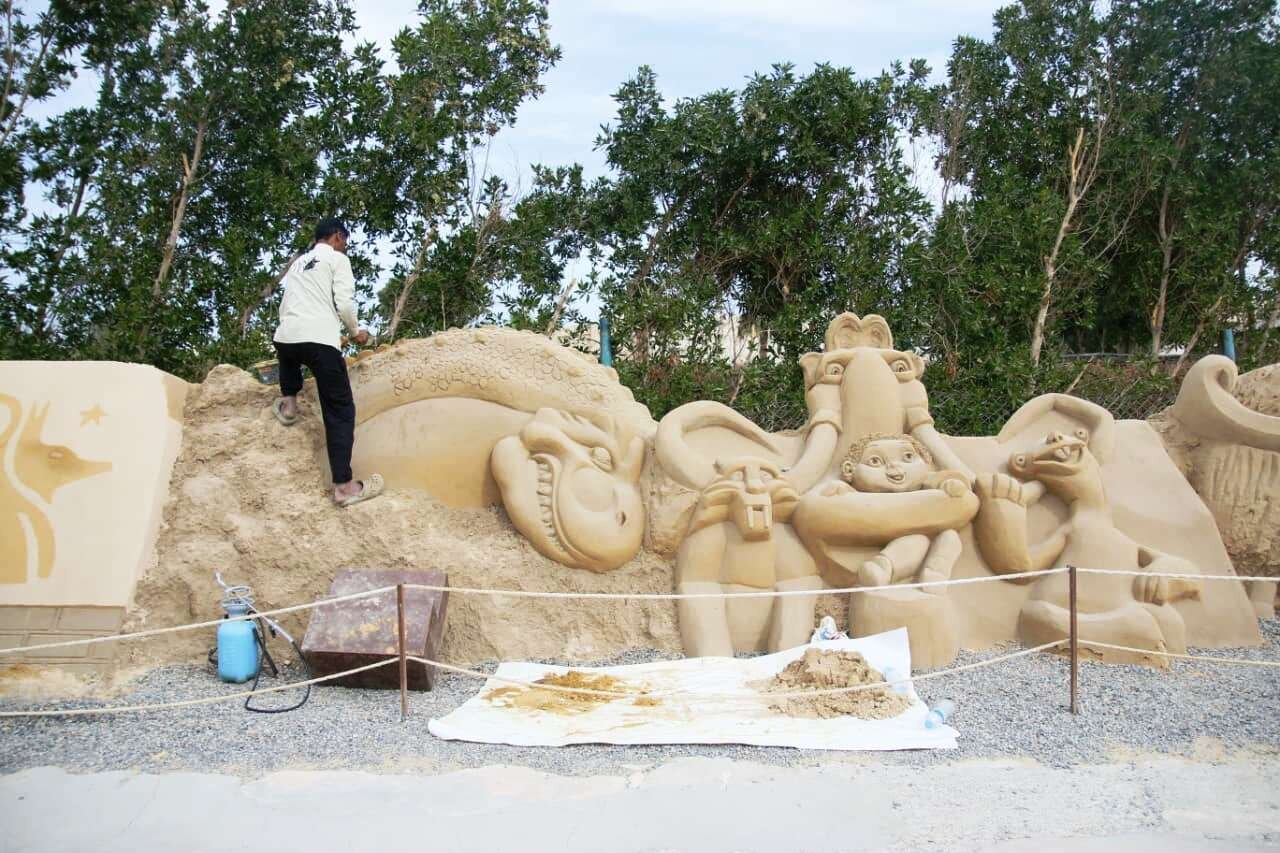
Regarding the technique of sculpture making, Ali explained that two types of sand are used: white and yellow. A wooden frame is built for each sculpture. The sand is mixed with water and compacted using a special technique involving periodic watering until it forms a cohesive, workable block. The sculpture is then shaped according to the intended design.
Abdelgaber Mustafa, one of the museum’s artists, explained that creating the museum’s sculptures took seven months. More than 25 artists from around the world participated, using 13,000 cubic meters of sand and 5,000 liters of water. A single sculpture can take up to three weeks, depending on the number of artists working on it. Each piece is then sprayed with a “glue” solution, a mixture of adhesive and water, to facilitate the sculpting process.
Maintenance and Restoration
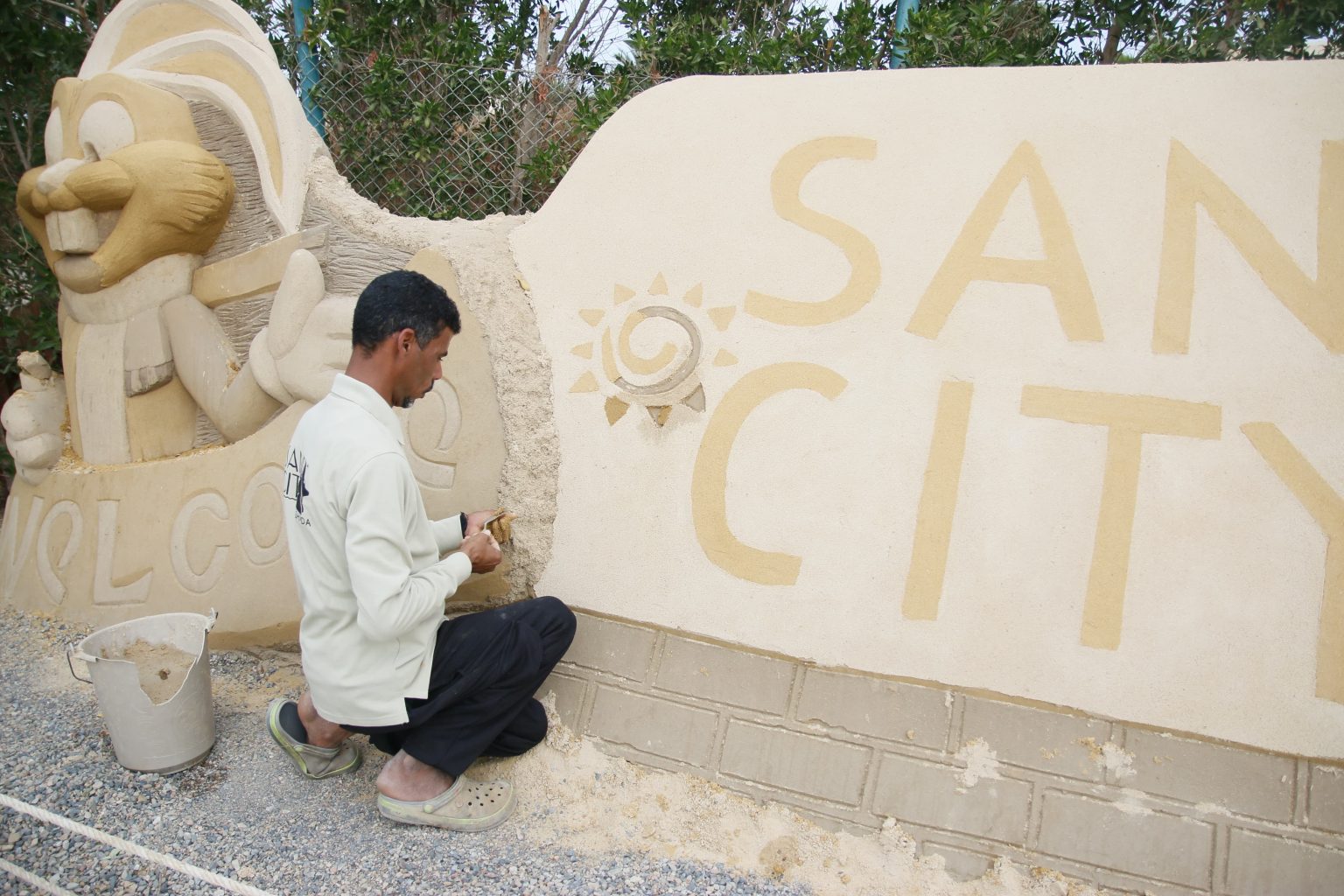
Abdelgaber added that the sculptures undergo continuous restoration and maintenance because they are quickly affected by weather conditions. The outer layer is removed and a new one added to bring out the color gradations in the sculptures’ designs. The museum relies on five permanent resident artists to carry out maintenance and restoration work.
Mohamed Qassem, another artist at the museum, joined the conversation, confirming that special preparations are made to cover the sculptures in case of rain. Weather forecasts are closely monitored to protect the artworks and prevent any damage.
Services for Visitors
Mohamed Qassem continued, explaining that the museum is open daily from 9:00 AM to midnight. It organises evening gatherings and barbecues inside the Arabian tent, which offers cheese, coffee, and traditional Arabic tea. The museum also hosts performances by tanoura dancers and folk troupes from the Nile Delta and Upper Egypt. These events help attract visitors, especially since the tent is designed in an authentic Arabian style with floor seating that gives visitors a sense of comfort and evokes the atmosphere of the desert and Bedouin life.
Banoub Ghaly, an antiquities restorer, explained that the museum opened in 2014 on a site covering 10,280 cubic meters. It receives visitors from around the world. Ticket prices are 200 Egyptian pounds for Egyptians and $10 for foreigners. The museum offers several services, including fast food, mandi rice and meat dishes, and evening barbecues, as well as several bazaars within the museum.
Ghaly noted that the museum can accommodate groups waiting for their flights after checking out of their hotels. It also features a theatre for performances and folk plays, and hosts celebrations for the various expatriate communities in Hurghada. An annual event is held regularly for people with special needs in the Red Sea on December 4th, organised by the museum’s management. The museum also offers art workshops for children and hosts school groups from across the governorate.
