



Step inside the Gothic soul of Damanhour, where the Church of the Annunciation has stood as a sanctuary of grace since 1875. From its rhythmic Italian roots and rare architectural splendor to the hallowed halls of its legendary “Seven Sisters” clinic, explore how this ancient hymn of a building remains a vital, beating heart for a diverse community.
By Mahmoud Dueir
The stones here possess a voice of their own. Far more than a mere structure or a house of worship, the Church of the Annunciation in the heart of Damanhour stands as an ancient hymn, a silent witness to the city’s shifting tides and the intimate histories of its people. For over a century, it has anchored a prominent corner of the city, greeting visitors with a steadfast grace and a profound sense of permanence.
A Sanctuary of Healing and Learning
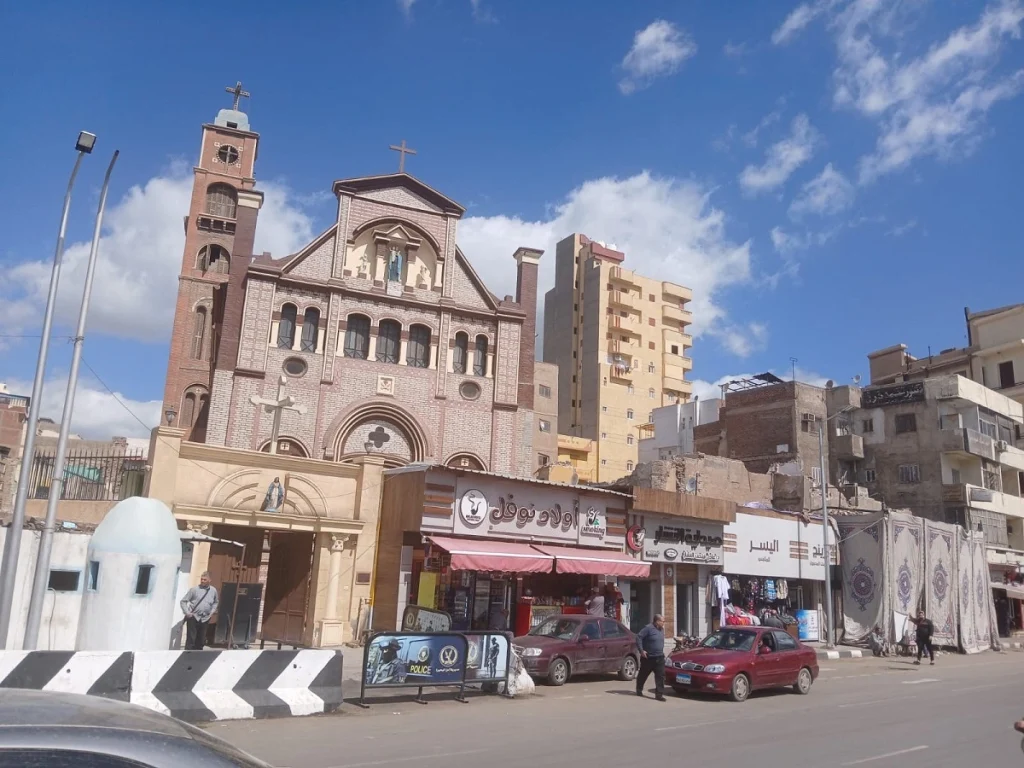
As one of the oldest ecclesiastical landmarks in the Beheira Governorate, the church occupies a sacred niche in the local psyche, primarily through its role as a pillar of social welfare. It houses the renowned “Seven Sisters” (El Sab’ Banat) charitable dispensary and the esteemed “Nuns’ School” (Madrasat al-Rahibat). Situated at the bustling Station Square, which briefly bore the name of the reformist Imam Muhammad Abduh before reverting to its colloquial moniker, the church is the first vision to greet travellers. Its rare architectural silhouette serves as a stately introduction to the city’s heritage.
Reflecting on the evolution of this hallowed site, Father Michael Sobhy, pastor of the Latin Church of Our Lady of the Annunciation, explains that the name honours the Archangel Gabriel’s visitation to the Virgin Mary. Established in 1875, the church initially flourished as a spiritual hub for the foreign delegations drawn to Rashid and Damanhour, which were then vibrant centres of trade with Italy, France, and Spain.
The Franciscan Legacy
“At the time, the Catholic community numbered a mere 185 souls,” Father Michael recounts. “By 1892, a primary school was opened to educate the city’s children. In 1900, the Franciscan Custody of the Holy Land resolved to purchase a plot of 1,843 square meters to construct a monastery and its annexes. After a meticulous survey of the site, Father Bonaventura de Andrea, the parish priest in 1911, submitted the architectural blueprints for the new friary. The Custody subsequently dispatched two thousand francs to begin the labour of creation.”
In 1918, at the request of Father Ferdinando Diu Tavelli, Superior of the Custody of the Holy Land, Bishop Aurelio Briante elevated Damanhour to an independent parish. Its spiritual jurisdiction expanded to encompass the surrounding hamlets of Halaq al-Jamal, Desouk, Kom Hamada, Abu al-Matamir, and Abu Homs.
During that era, a single Franciscan priest ministered to a flock of 400 faithful comprising 300 Eastern Catholics and 100 Latins. The parish pulse beat through rigorous spiritual rituals: the Marian Month (Al-Shahr al-Maryami), the Stations of the Cross (Darb al-Salib), First Friday Masses, and Tuesday devotions to Saint Anthony. Sermons were delivered in a rhythmic alternation of Arabic and Italian, echoing the cosmopolitan spirit of the age.
A Sanctuary for Foreign Catholic Festivals and the Divine Liturgy
The Franciscan presence in Damanhour dates back to 1860, when friars would journey from Kafr el-Zayyat or St. Catherine’s in Alexandria to celebrate the Divine Liturgy (Al-Quddas al-Ilahi) for the city’s foreign residents on Sundays and feast days. By 1871, Father Pascal was appointed as the permanent minister.
By 1874, Damanhour had zenithal importance as a commercial crossroads, teeming with Mediterranean merchants and expatriate families. This influx necessitated a permanent sanctuary, and construction on the church and monastery commenced. By 1875, the structure was complete, and the resident pastor took up his dwelling.
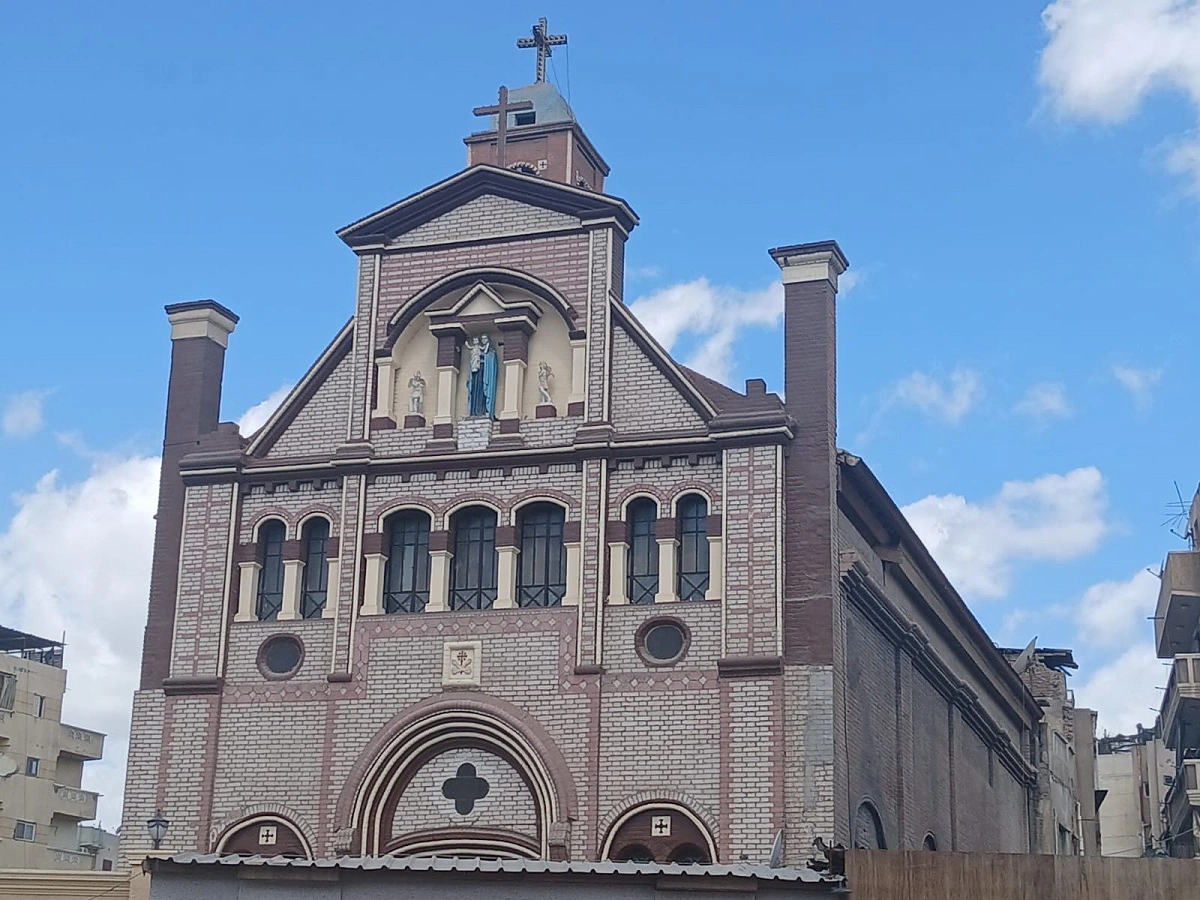
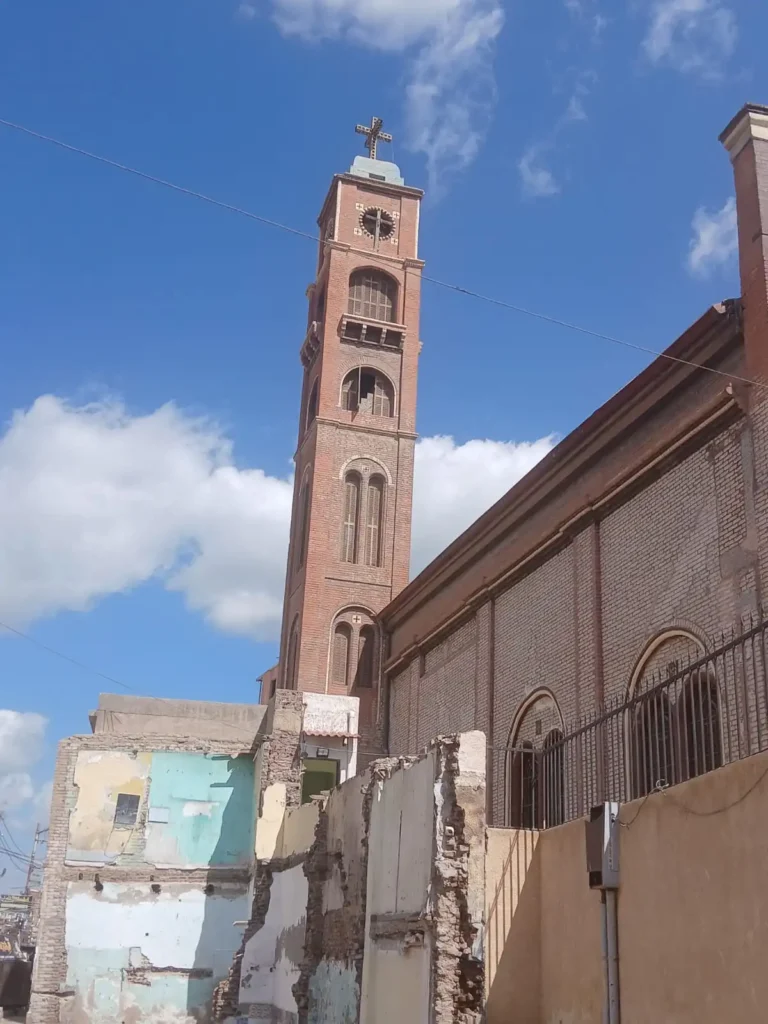
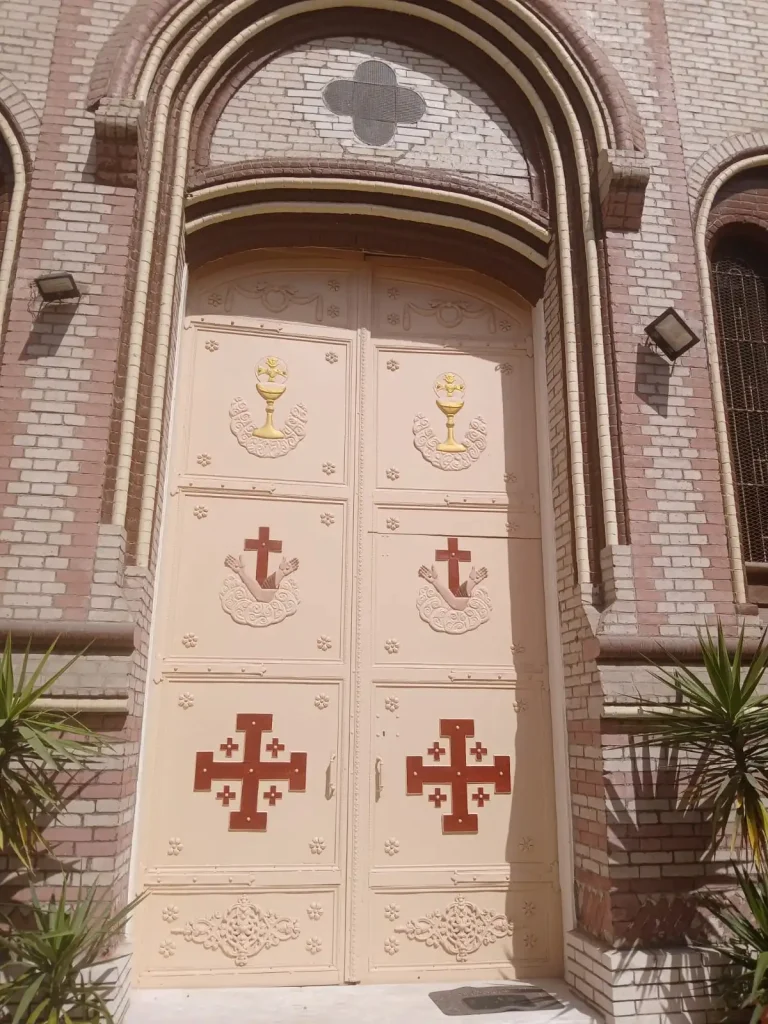
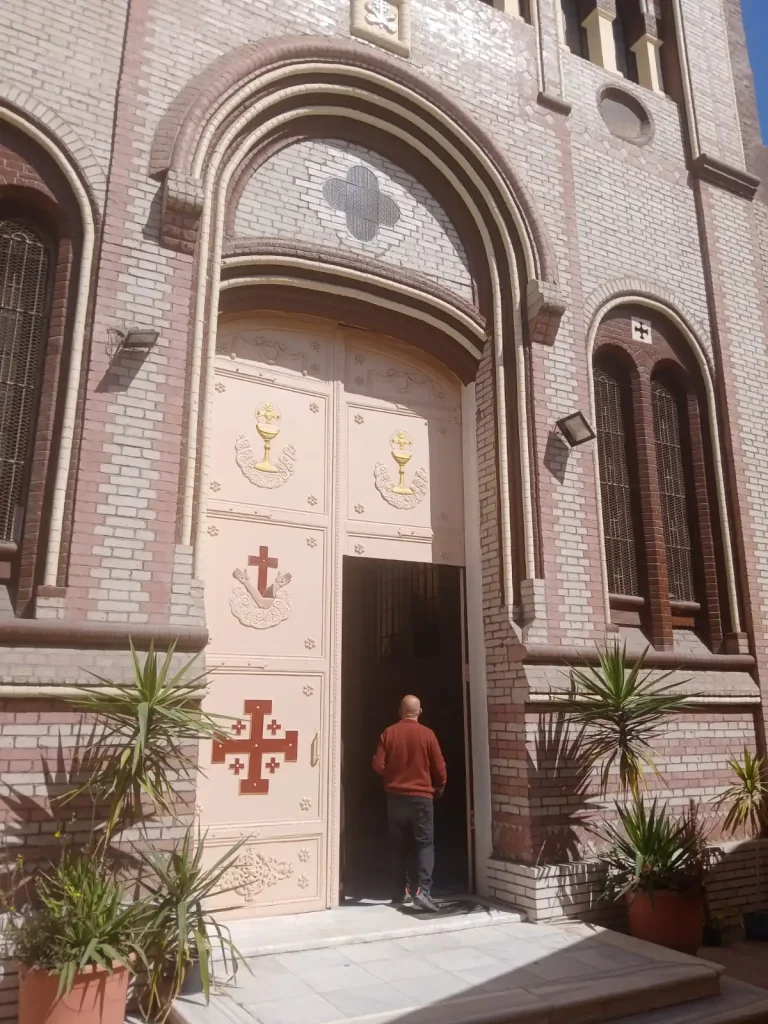
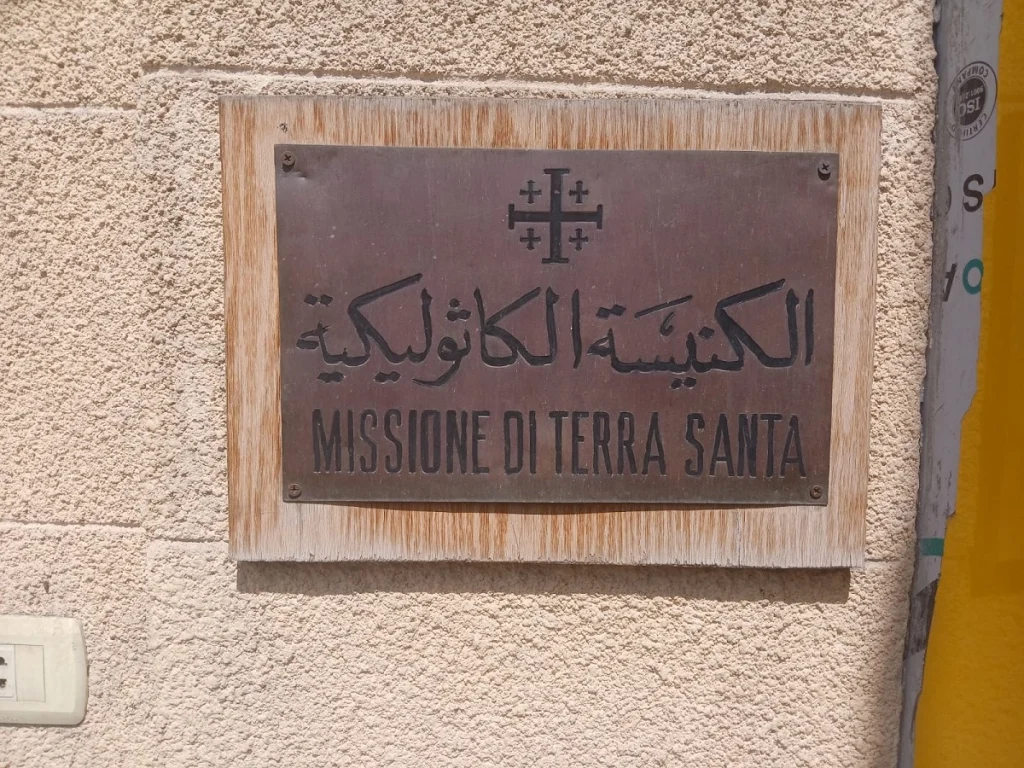
The year 1876 marked the formal consecration of the “Lady of the Annunciation.” The rites were graced by Father Gesualdo and Brother Omo Bono of the De La Salle Brothers (Les Frères), who led the liturgical hymns. Though the church remained an extension of St. Catherine’s until 1918, it eventually forged its own path. Among the original artifacts that remain untouched is the primary bell tower and the bell itself, forged in 1881. The facade still bears the emblem of the Custody of the Holy Land: two crossed arms beneath a large cross flanked by four smaller ones, a testament to the church’s historical link to Jerusalem that lasted until 1922.
Gothic Aesthetics: The Beauty of the Annunciation
Dr Shahd el-Bayya, a visiting lecturer at the Institute of Coptic Studies and director of development for Coptic antiquities in Wadi el-Natrun, notes that the church is a masterpiece of the Basilican style. Its exterior is defined by three distinct facades.
The principal facade, overlooking Station Square, is a tribute to the Gothic Revival style that swept through Egypt during the era of foreign enclaves, particularly drawing from medieval sensibilities. At its heart sits a double-leaf door crowned by a composite semi-circular arch, flanked by symmetrical windows. Dr El-Bayya points to the upper facade, where a grand window is divided by seven slender columns. Above this, an open triangular pediment reveals a large square niche housing three granite statues: the Virgin Mary flanked by angels representing Gabriel’s annunciation. The roof, shaped like a gabled truss, symbolically evokes Noah’s Ark.
To the southeast, the Gothic bell tower rises in several tiers, a vertical anchor for the city skyline. Inside, the church unfolds into a vast rectangular nave, terminating in the east with a grand apse that houses a pristine marble altar.
A Heart Open to All
“I was baptised in this church; it has been the backdrop of my life for over forty years,” says Nader Azmi, a dedicated servant of the parish. He notes that during major festivals and holidays, the church becomes a civic crossroads, hosting local leaders and dignitaries. Among the notable figures associated with the parish is the actress Caroline Azmi.
Magda Azmi, now retired, recalls arriving from Cairo in 1960. “The church served so many families, both Egyptian and the Greek and Italian expatriates who lived here then,” she says. It was within these walls that she received her First Communion, and she remains a proud alumna of the Nuns’ School.
Healing for the Humble
The “Seven Sisters” dispensary remains one of the church’s most vital legacies, offering medical care at symbolic prices to the people of Beheira. Iqbal Aziz, a staff member for 34 years, remembers a time when a consultation cost a single pound. “The nuns provided exceptional care to everyone in the governorate,” she says, noting that the vast majority of those seeking healing in the incense-heavy atmosphere of the clinic were, and remain, members of the local Muslim community.
