



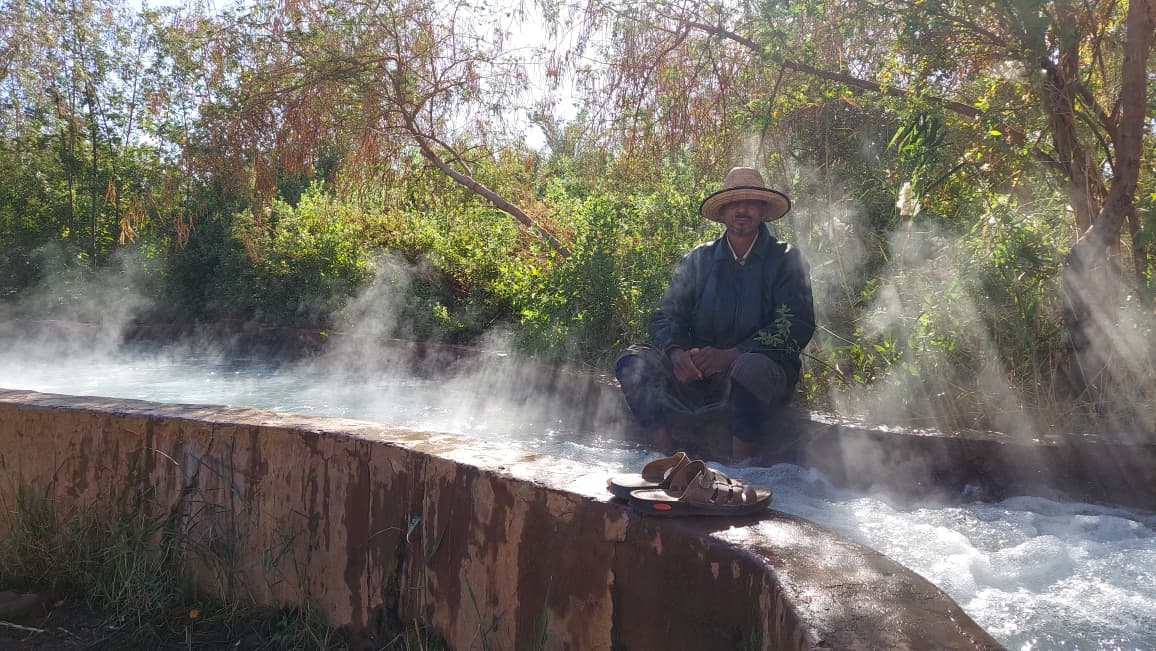
The therapeutic wonders of the Dakhla Oasis in Egypt’s New Valley, where ancient sulfuric springs offer natural relief for rheumatism and skin conditions amidst a serene, star-lit desert landscape.
In the heart of Egypt’s New Valley Governorate, specifically within the Dakhla Oasis, sulfuric springs dominate the landscape of attraction. These artesian flows, surging from the earth’s molten interior, have transformed into global sanctuaries where travelers of every nationality seek healing and respite. Nestled within the Western Desert, the city of Mut serves as the soul of Dakhla. As one of the oldest inhabited regions on earth, it weaves together the allure of antiquity with the raw natural resources that position the New Valley as a burgeoning pillar of the Egyptian economy.
A Legacy of Statecraft and Stone
Omar Dhahi, the former Director General of the Tourism Promotion Authority in Dakhla, speaks with reverence regarding the scientific and aesthetic value of these thermal veins. “The sulfuric wells of Dakhla represent a national treasure yet to be fully realized,” he notes. “This water ascends from depths occasionally exceeding a thousand meters, reaching temperatures that serve as a perfect catalyst for stimulating blood circulation and soothing arthritic inflammation.”
He continues: “Natural healing in Dakhla relies on a rare alchemy of mineral elements and sulfur (Kibreet), placing these wells in direct competition with the most prestigious therapeutic resorts in Europe and the Mediterranean basin. We strive to curate the image of the oases as a sanctuary of safety and distinction for the traveler in pursuit of both remedy and serenity.”
Dhahi explains that the region’s renown is anchored in a long history of official patronage. Local annals highlight the visit of the late President Anwar Sadat to Dakhla shortly after he assumed the presidency in the 1970s. That visit served as a formal proclamation of the New Valley’s significance as a pristine frontier for development. Sadat directed the immediate utilization of Dakhla’s sulfuric springs and the modernization of the surrounding infrastructure, driven by his conviction that Egypt’s luminous future stretched across its vast deserts and the revitalization of its oases.
Echoes of the Deep: Local Devotion
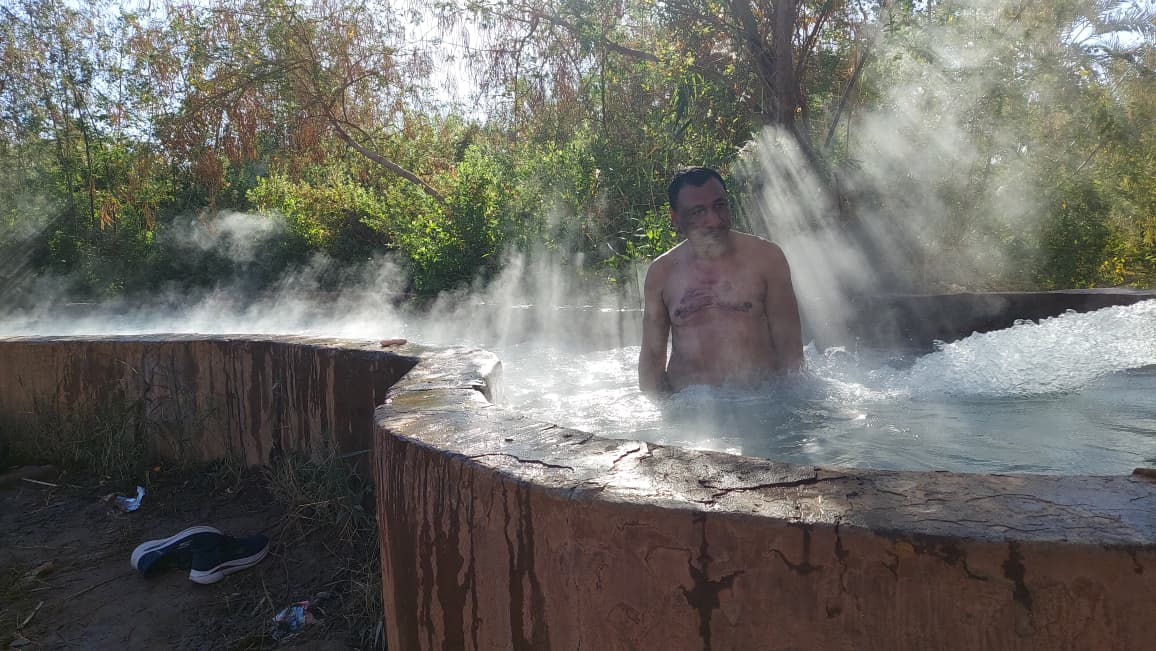
On a communal level, the people of the oases share an emotional and medicinal bond with these springs, an inheritance passed down through generations. Attia Mohammed, a resident of Mut, expresses this connection with the grounded sincerity of the desert. “This water is has a divine blessing from God,” he says. “We grew up in Dakhla watching people flock to us from every corner of the earth just to submerge themselves in the well. This sulfuric water allows the body to ‘unravel’ (fakk); if a person suffers from bone aches or rheumatism, they feel a profound lightness the moment they enter that warmth. We consider these wells a ‘God-given pharmacy.’ The people here are kind, welcoming guests with open hearts, and thank God, tourism is returning and the land is moving again.”
Nature’s Answer to the Global Spa
“Uncle Ahmed,” the guardian of one of the primary wells, confirms that the influx of visitors is a perennial tide, though it reaches its zenith with the arrival of winter. He notes that the area hosts thousands of visitors annually. “I see the whole world here,” he remarks. “Tourists arrive from Germany, France, and Russia, alongside Arabs who come specifically to spend a week or more steeped in the atmosphere of the oases.”
He adds: “Tourism in the New Valley thrives in the winter because the climate here is gentle and beautiful. People flee the European frost to bask in our sun and the sulfuric waters rising from the earth’s core. Visitors love to come at night under the canopy of stars, descending into the water to embrace a silence they won’t find anywhere else.”
The Perspective of Restorative Medicine
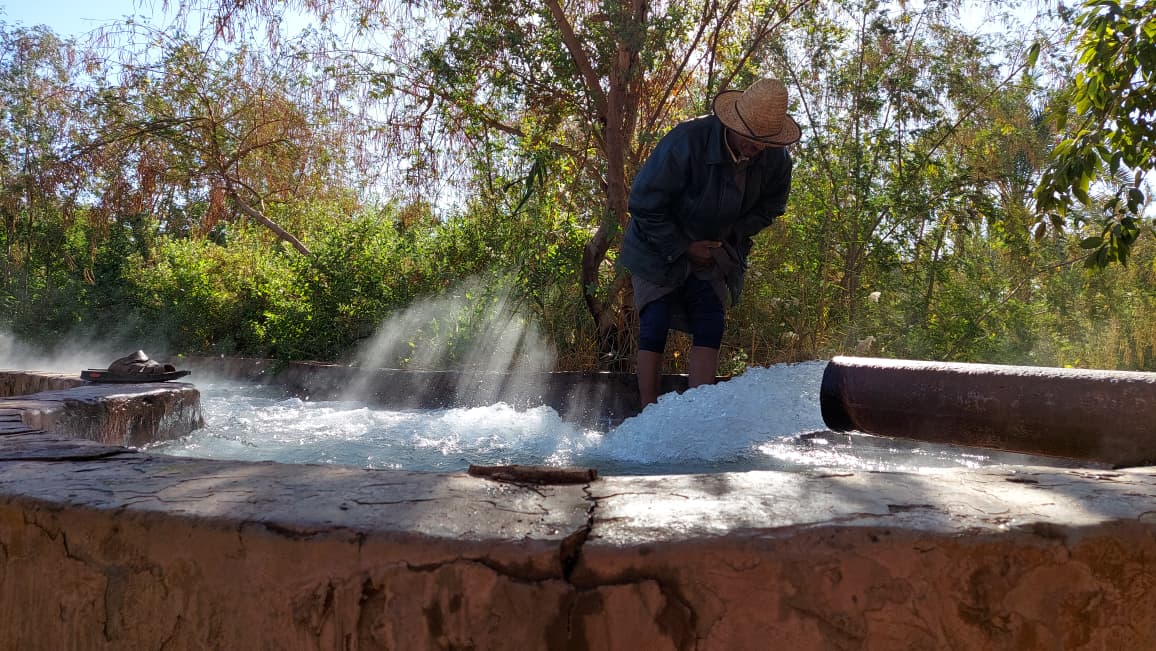
Dr. Mahmoud Sabry, a consultant in physical medicine, rehabilitation, and rheumatology, asserts that the Dakhla springs are a unique natural resource from a clinical perspective. They are distinguished by a balanced concentration of sulfur and carbon dioxide, complemented by essential minerals like calcium. From a medical standpoint, these elements, when absorbed through the skin, assist in mitigating chronic inflammation, particularly for those burdened by rheumatism and arthritis. Furthermore, the water’s natural heat facilitates vasodilation and achieves a state of profound muscular relaxation.
Dr. Sabry concludes: “Therapy in Dakhla is not confined to the musculoskeletal system; it extends to dermatological health. Clinical observations and patient experiences suggest that bathing in these waters contributes to the improvement of conditions such as psoriasis and chronic eczema, owing to the antiseptic and regenerative properties of natural sulfur.”
He emphasizes, however, that this modality of treatment serves as an effective complementary therapy that supports, rather than replaces, traditional medical protocols. It remains preferable to consult a physician to determine the duration and frequency of immersion based on an individual’s specific health profile.
